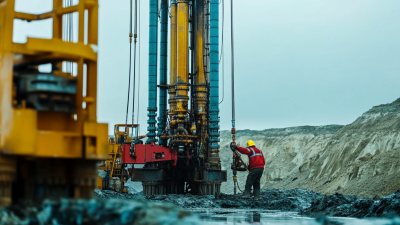
When it comes to Oil and Gas exploration, using downhole shaped charges can really boost efficiency. These tools are key for perforating the casing and creating pathways for hydrocarbons to flow. But, honestly, getting the most out of them isn’t just a matter of flipping a switch—you need to understand them well and have some expertise under your belt.
Knowing how downhole Shaped Charges work is pretty important. Each type is designed for a specific purpose, and picking the right one depends on the geological conditions you're dealing with. If you don’t choose wisely, things can get tricky—unexpected challenges might pop up. Sometimes people struggle with positioning, which can cause the whole operation to go south.
And let’s not forget safety—this is a big deal. Handling these charges isn’t something to take lightly. It takes proper training and respect for protocols because a small mistake can turn into a big problem. Paying attention to these details really makes a difference when using downhole shaped charges. Making continuous improvements and learning from past experiences is just part of the game. Honestly, it’s not just about knowing how to use the tools; it’s about mastering the art of extraction itself.
Downhole shaped charges are essential tools in the oil and gas industry. These devices create specific explosive effects to enhance well stimulation. They are often used for perforating rock layers and accessing oil or gas reservoirs. The explosive charge is carefully designed to direct energy towards the target.
Understanding the technical aspects of downhole shaped charges is crucial. They function by shaping the explosive material, focusing the blast into a powerful jet. This causes a perforation in the casing, allowing fluid flow. However, miscalculating depth or charge placement can lead to ineffective results. Proper training and experience are necessary for delivering optimal performance.
Applications of downhole shaped charges extend beyond just oil extraction. They can also be utilized in mining and geological research. Each application requires different specifications and considerations. For example, one type may work well in soft rock but fail in hard formations. This variability demands careful evaluation and adjustment in techniques. Balancing effectiveness and safety is a consistent challenge.
Choosing the right type of shaped charge is crucial for success in downhole operations. Different applications require specific designs to achieve optimal performance. For example, some tasks may need a deep penetration charge. Others may call for directional charges that enhance efficiency in fracturing.
Consider the geological formation when selecting a charge. A high-density formation may require a more powerful charge to achieve desired results. However, overestimating the charge requirements can lead to unintended consequences. A balance is essential. It’s also important to review past experiences and failures. Analyzing what didn’t work can guide current decisions.
The size and shape of the charge impact its effectiveness too. A smaller charge may suffice for soft formations but may fail in tougher environments. Take time to evaluate the task at hand. Reflections on previous jobs can reveal patterns. Sometimes, the most effective charge choice is the one that feels less obvious. Innovations often come from revisiting basic principles in a new light.
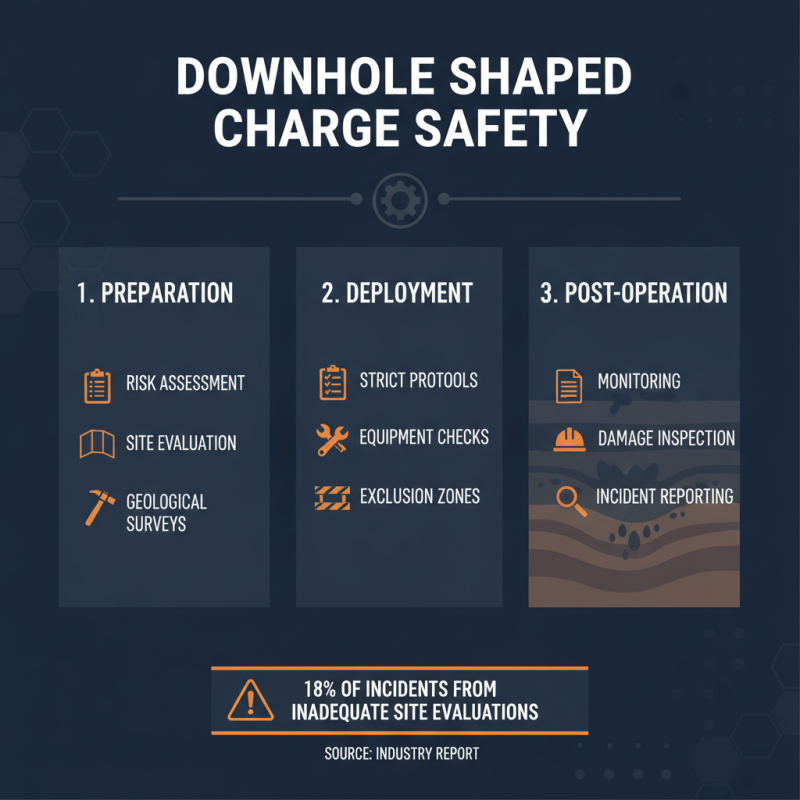
Using downhole shaped charges requires careful preparation and strict safety measures. Before deploying these charges, ensure a thorough risk assessment. Evaluate the location and surrounding environment. In a recent industry report, it was noted that approximately 18% of incidents involve inadequate site evaluations. This statistic highlights the importance of understanding geological conditions and potential hazards.
Tip 1: Always wear appropriate personal protective equipment (PPE). This includes helmets, goggles, and gloves. Insufficient protection can lead to serious injuries. A study indicated that improper PPE use contributed to over 20% of workplace accidents in this sector.
Tip 2: Verify the integrity of the shaped charges before use. Check for signs of damage or wear. A compromised charge can pose significant risks. Reports show that 15% of failures resulted from overlooking these crucial inspections.
Ensure all personnel involved are trained and aware of emergency protocols. Regular drills can enhance response times during an incident. Neglecting preparation can lead to devastating outcomes. The data shows that improved training can reduce accidents by up to 30%. Prioritizing safety in these operations is essential for success and wellbeing.
When using downhole shaped charges, optimal depth and placement make a significant difference in effectiveness. Understanding the geology of the area helps in determining the best depths for detonation. Each formation behaves differently. If you misplace a charge, the intended outcome may be compromised. Placement also affects shock wave propagation. Too shallow, and the energy disperses inefficiently. Too deep, and it may not reach the desired zone.
Effective detonation requires careful calculations of distances. Minimizing damage to nearby equipment is crucial. Charges must align with target fractures. Testing different depths can provide valuable insights. Sometimes, adjustments only slightly improve performance. It’s critical to evaluate each attempt, learn from failures, and adapt methods. Observing the results of detonations can reveal patterns. Ultimately, it’s worth spending time on precise placements. The wrong location can lead to disheartening results and wasted resources.
Every successful detonation requires a balance between art and science. Even experienced professionals face challenges. Real data from previous detonations might suggest a different depth. Documenting these findings helps in refining techniques. What works in one scenario may not apply to another. Training teams to analyze outcomes is essential. With time and practice, optimizing depth and placement becomes more intuitive.
Monitoring and assessing the results of downhole shaped charge use is crucial. After deployment, it is essential to analyze the performance of the charges. This analysis helps ensure effectiveness in creating the desired fractures. Collecting data from various sensors can provide valuable insights into pressure changes and wave propagation. Monitoring tools can track immediate effects on the formation.
Visualization is key. Use video recordings and imaging techniques to capture the effects of the shaped charges. This allows for detailed assessments of blast patterns. It is vital to compare these patterns against pre-defined models. Unexpected results should lead to a thorough review of techniques and tools. Understanding anomalies can drive improvements in future applications.
Reflection on past choices can reveal a path to better outcomes. Evaluating the communication between field teams and engineering staff can highlight weak points. Regular feedback loops are essential for continuous improvement. Emphasizing collaboration can generate more reliable results. Being open to change is necessary for success.
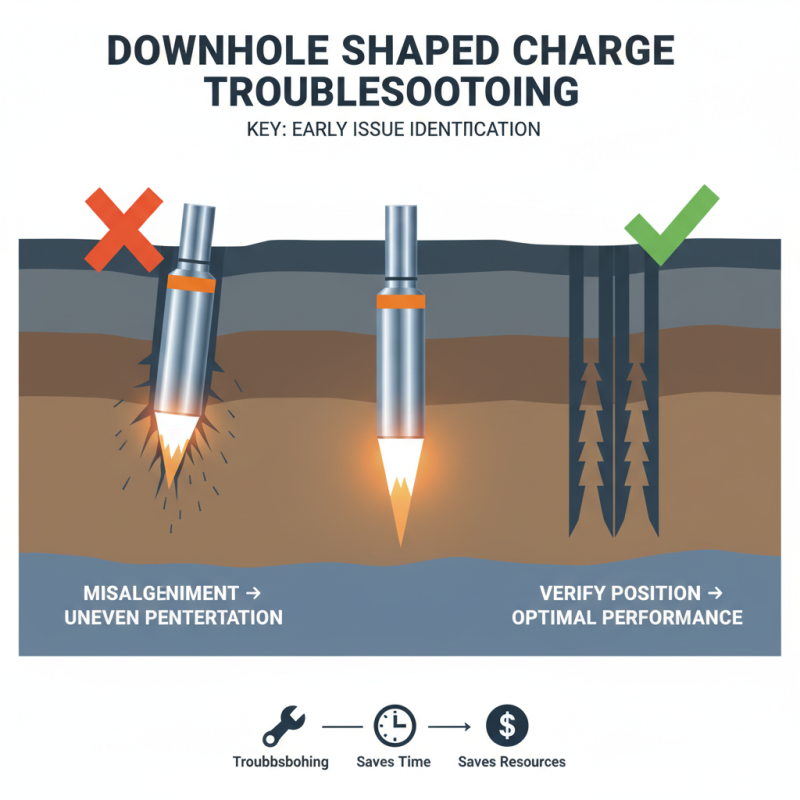
Using downhole shaped charges can be complicated. Proper troubleshooting is key to achieving optimal performance. Identifying common issues early saves time and resources. One frequent problem is misalignment during deployment. This can lead to uneven penetration. Verify the charge's positioning before firing. A simple check can prevent costly mistakes.
Another common issue is excessive vibration during detonation. This can affect the integrity of the charge. Monitoring environmental factors helps mitigate this risk. In some cases, the surrounding rock may not be suitable. Poor rock conditions can hinder the effectiveness of the charge. Conduct thorough pre-assessment of the geological environment to avoid failures.
Finally, consider the type of detonation system used. A poorly designed system can result in incomplete charges. Regular maintenance and inspection are essential. Make sure to address wear and tear issues. Noticing a decline in performance can be pivotal. Adjusting your approach based on these observations can lead to improved results over time.
Recent advancements in technology have significantly improved shaped charge design. Innovative materials are now being utilized to enhance performance. These materials provide increased stability, better energy transfer, and reduced environmental impact. The shift towards using composites is noteworthy. They are lightweight and offer greater safety during handling and use. Improved design software also aids engineers in modeling shapes with greater accuracy. This results in charges that are more effective in various applications.
Additionally, future trends point toward increasing automation in the manufacturing of shaped charges. Automated processes can ensure consistency and precision. This might reduce human error, which is often an overlooked aspect in production. However, automation also raises concerns about job loss in traditional manufacturing roles. It's crucial to find a balance. Enhanced data analytics will allow for smarter decision-making during the design phase. Understanding the specifics of each application helps in tailoring the design accordingly.
Despite these advancements, challenges remain. For instance, scaling new technologies for commercial use can be difficult. Some designs may perform well in labs but fail in real-world conditions. Testing and validation processes need to be robust to identify potential failures early. Continuous feedback loops are essential for improvement. As the field evolves, it is vital to reflect on these aspects to ensure progress is impactful and sustainable.
| Tip No. | Tip Description | Expected Outcome | Future Trends |
|---|---|---|---|
| 1 | Choose the right charge for the application. | Higher penetration and efficiency. | Development of customizable charges. |
| 2 | Optimize spacing and placement of charges. | Maximized fracture networks. | Advanced simulation software for layout planning. |
| 3 | Monitor the wellbore conditions accurately. | Improved safety and performance. | Integration of real-time data analytics. |
| 4 | Utilize multi-phase flow simulation. | Better prediction of charge effectiveness. | Emerging AI technologies for simulation accuracy. |
| 5 | Implement advanced materials in charge design. | Increased durability and performance. | Focus on nanotechnology in materials science. |
| 6 | Conduct thorough pre-job planning. | Reduced operational risks. | Enhanced checklist and process management tools. |
| 7 | Train personnel on handling shaped charges. | Increased safety and operational efficiency. | Virtual reality (VR) training programs. |
| 8 | Incorporate environmental considerations into planning. | Minimized environmental impact. | Innovative eco-friendly charge designs. |
| 9 | Utilize feedback for continuous improvement. | Enhanced product life cycle and usage. | Data-driven design iterations. |
| 10 | Stay updated with the latest research and trends. | Adoption of cutting-edge technologies. | Openness to innovation in shape charge technology. |
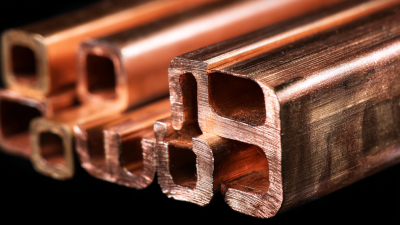
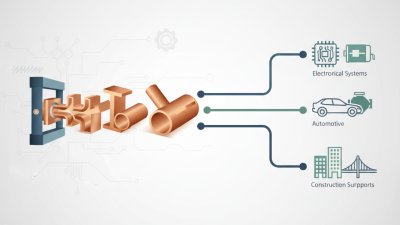
The marine industry increasingly relies on special-shaped copper extrusions due to their unique properties that align perfectly with the stringent demands of maritime applications. With the growing need for durable materials resistant to corrosion, specially designed copper profiles offer a compelling solution for shipbuilding, underwater devices, and the construction of oceanic structures. Studies from industry reports indicate that copper's inherent conductivity and mechanical strength significantly enhance the operational efficiency of marine technologies, facilitating faster and more reliable performance in various underwater environments.
Recent analyses highlight that copper extrusions are customized to meet specific regulatory standards and operational requirements within the marine sector. According to the Marine Technology Society, the use of corrosion-resistant materials is paramount, especially in regions exposed to harsh saline conditions. These specially-shaped extrusions not only provide structural integrity but also ensure longevity, reducing the necessity for frequent replacements and maintenance. The growing trend of designing marine components that can withstand extreme environments emphasizes the importance of employing copper profiles that can deliver lasting durability while maintaining effectiveness.
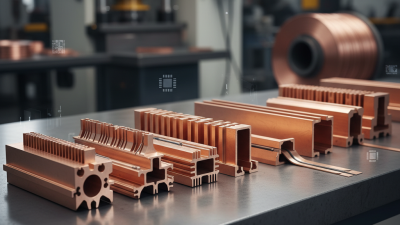
Furthermore, the ongoing innovations in copper extrusion techniques enable manufacturers to create complex shapes that cater to the evolving needs of marine industry applications. These advancements play a crucial role in improving energy efficiency and overall performance, aligning with the industry's shift towards sustainable practices. Reports suggest that the demand for high-performance marine materials, including special-shaped copper extrusions, is forecasted to rise significantly, driven by increased investments in marine research and development projects.
: The content aims to provide useful information and insights on various topics.
Yes, sharing is encouraged, but ensure proper credit is given.
Some topics may touch on sensitive areas, so discretion is advised.
Updates occur regularly to reflect new information and developments.
Report any errors found for review and correction. Feedback is valuable.
Yes, feedback can be submitted through designated channels.
While helpful, it's best to consult multiple sources for a balanced view.
Some topics may have more depth than others. This is an area for improvement.
Yes, summaries are provided, but they may lack some details.
Subscribe to notifications or check regularly for updates.
Downhole Shaped Charges are specialized explosives designed for use in oil and gas drilling operations. This article outlines essential tips for utilizing these tools effectively, starting with a clear understanding of their applications and the importance of selecting the appropriate type for specific tasks. Effective preparation and safety measures are crucial to ensure safe deployment. Additionally, the article emphasizes the significance of optimal depth and placement techniques for successful detonation, along with the need to monitor and assess the outcomes of their use.
Common issues that may arise during operations are addressed through troubleshooting strategies. Finally, the article discusses advancements in technology and potential future trends in the design of Downhole Shaped Charges, highlighting the ongoing evolution and improvement in this critical field. By implementing these strategies, operators can enhance the effectiveness of their downhole operations while ensuring safety and precision.